


Welcome to
Unity Service Dogs
Your trusted partner in canine companionship and assistance. Our dedicated team specializes in cost-effective psychiatric assistance training service dogs. Providing invaluable support and enhancing independence.
Discover the difference a Unity Service Dog can make in your life today.
Psychiatric Service Dog Training
A psychiatric service dog is more than a source of comfort. A service dog is trained to perform specific tasks that directly assist a person with a disability. Training is tailored to the individual handler's needs, symptoms, and daily challenges. Because no two people experience disability in exactly the same way, the tasks a service dog performs may vary significantly from one handler to another. Unity Service Dogs offers pre-trained service dogs for sale to individuals with disabilities.


More Common
Applications
• Anxiety
• Post-traumatic stress disorder (PTSD)
• Bipolar disorders
• Schizophrenia
• Obsessive-compulsive disorder (OCD)
• Agoraphobia
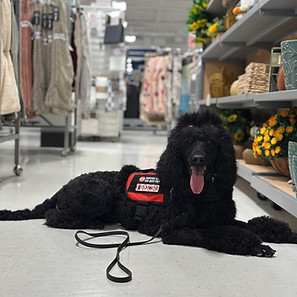
Social Phobias
A psychiatric service dog can be trained to assist individuals with social phobiasby interrupting anxiety-related behaviors,creating personal space through blocking, and performing grounding tasks to help mitigate disability-related symptoms in social settings.
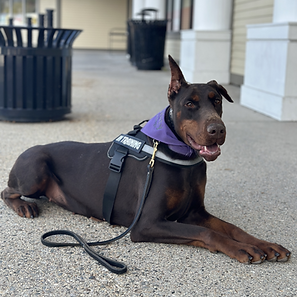
Depression
A psychiatric service dog can be trained to assist individuals with depression by interrupting disability-related behaviors, providing deeppressure therapy, retrieving essential items, and performing trained tasks that help support daily routines, increase independence, and mitigate symptoms associated with their disability.

Panic Attacks
A psychiatric service dog can be trained to assist individuals experiencing panic attacks by interrupting escalating anxiety-related behaviors, providing deep pressure therapy, performing grounding tasks, and creating personal space through blocking to help mitigate disability-related symptoms and support the handler in navigating distressing situations.
Available Dogs
Trained & Ready
Each of these remarkable service dogs is trained to provide invaluable assistance through service dog tasks and companionship to those in need. Not all service dogs for sale are posted, please contact us for availability.

Available For Placement -
Standard Poodle

MATCHED WITH HANDLER - Psychiatric Service Dog
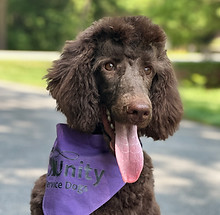
MATCHED WITH HANDLER -
Autism Service Dog

MATCHED WITH HANDLER - Psychiatric Service Dog

MATCHED WITH HANDLER - Psychiatric Service Dog
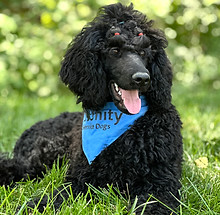
MATCHED WITH HANDLER -
Psychiatric Service Dog
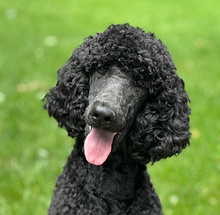
MATCHED WITH HANDLER - Psychiatric Service Dog

MATCHED WITH HANDLER -
Autism Service Dog

MATCHED WITH HANDLER - Psychiatric Service Dog

More Than Companionship — A Partner in Disability Support
Psychiatric service dogs are specially trained to assist individuals living with psychiatric disabilities by performing specific tasks that help mitigate the effects of their disability. While every person's needs are different, each psychiatric service dog is trained to provide practical, individualized support that helps their handler navigate daily life with greater safety, independence, and confidence.
Training is tailored to the individual handler's needs, symptoms, and daily challenges. Because no two people experience disability in exactly the same way, the tasks a service dog performs may vary significantly from one handler to another.
Individualized Task Training
Behavior Interruption
Interrupting disability-related behaviors or patterns, such as repetitive actions, skin picking, or other behaviors identified as appropriate for task training, by using a trained nudge, paw, nose touch, or other learned cue.
Deep Pressure Therapy (DPT)
Applying trained, gentle body pressure by lying across or leaning against the handler when requested or in response to a trained cue. This task may help the handler manage episodes of distress, panic, or other disability-related symptoms.
Blocking
Positioning their body between the handler and other people to create a comfortable amount of personal space in crowded or overwhelming environments.
Grounding and Tactile Stimulation
Providing a trained physical interaction, such as nudging, pawing, or sustained contact, to help redirect the handler's attention during dissociation, panic, or other disability-related episodes.
Panic or Episode Response
Performing trained actions when the handler experiences a recognized episode or gives a specific cue. These actions may include retrieving a needed item, initiating tactile contact, or guiding the handler toward a designated safe location when appropriately trained.
Interruption of Dissociation
Using a trained behavior, such as persistent nudging or paw contact, to help the handler reconnect with their surroundings during a dissociative episode.
And So Much More!

Client Feedback & Experiences
"Vanessa demonstrated incredible responsiveness throughout the training process and showed a deep understanding of where Maverick was in terms of his abilities. Vanessa customized the initial lessons to match Maverick’s unique abilities. By incorporating his love for food, she helped him learn skills effectively, while also teaching us as owners how to train him properly.
Vanessa’s understanding of service dog tasks, specifically tailored to my disability, was impressive. She gradually developed Maverick’s skills in a way that adapted to his growth and abilities. She also provided continuous guidance on how to reinforce these skills in daily life, adapting training to his needs, such as increased exposure to environments with other dogs to help improve his focus. ..." (READ FULL REVIEW ON GOOGLE)
- Diana

